
In the world of healthcare facilities management, "downtime" is a word that carries significant weight. Unlike a manufacturing plant or a corporate office where a temporary loss of utility service might lead to a dip in productivity, a hospital operates on a mandate of absolute continuity. Within these parameters, gas supplies—specifically medical-grade oxygen, and nitrogen, —are not just utilities; they’re life-support systems.
As healthcare infrastructure across North America undergoes a period of rapid modernization, facilities managers are increasingly faced with a complex paradox: How do you renovate, expand, or upgrade a hospital’s primary gas delivery system without interrupting the flow of life-saving gases to patients?
The answer lies in the strategic deployment of mobile, high-capacity infrastructure. Specifically, the utilization of flexible lease rentals, such as the Cryo-Lease 5500 Dual Med Portable, has emerged as the industry standard for maintaining gas continuity during planned outages and major construction phases.
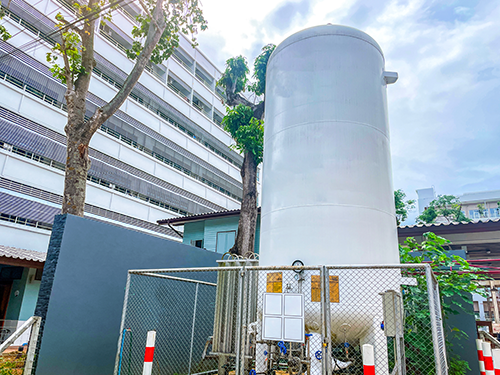
Most modern hospitals rely on a centralized bulk cryogenic storage system located on the periphery of the campus. From this central hub, a complex network of piping delivers gas to operating rooms, ICU beds, and patient suites. While these systems are designed for longevity, they are not immune to the requirements of progress.
There are three primary scenarios where a hospital’s gas supply becomes vulnerable:
System Modernization and Upgrades: As hospitals grow, their demand for gas often outpaces the capacity of their original vaporizers or bulk tanks. Upgrading these components requires the primary system to be taken offline.
New Wing Construction: Expanding a hospital facility often requires re-routing existing mainlines. Splicing into a primary medical gas header is a high-stakes operation that necessitates a reliable "temporary" supply to keep the rest of the facility operational.
Emergency Repairs and Seismic Retrofitting: In regions prone to seismic activity or in older facilities requiring structural reinforcements, the integrity of the gas lines must be protected, often requiring a temporary bypass of the main system.
In any of these scenarios, the risk of a "single point of failure" is unacceptable. This is where the concept of a temporary high-pressure bridge becomes essential.
The Vulnerability of Hospital Gas Infrastructure
The Regulatory Landscape: NFPA 99 and Patient Safety
For hospital operations staff, the guiding star is NFPA 99: Health Care Facilities Code. This code mandates rigorous standards for medical gas and vacuum systems, emphasizing that any temporary supply must meet the same stringent purity and reliability standards as the permanent system.
When a hospital plans an outage, the secondary supply must not only provide the required volume but also ensure redundancy. If a temporary tank fails or runs empty during a construction splice, there is no "backup for the backup" unless the equipment is specifically designed for medical gas applications.
The use of a standard industrial tank is often insufficient for healthcare environments. Hospital facilities require medical-grade equipment that is cleaned for oxygen service and designed with the dual-pathway reliability that healthcare inspectors demand.
The Solution: The Cryo-Lease 5500 Dual Med Portable
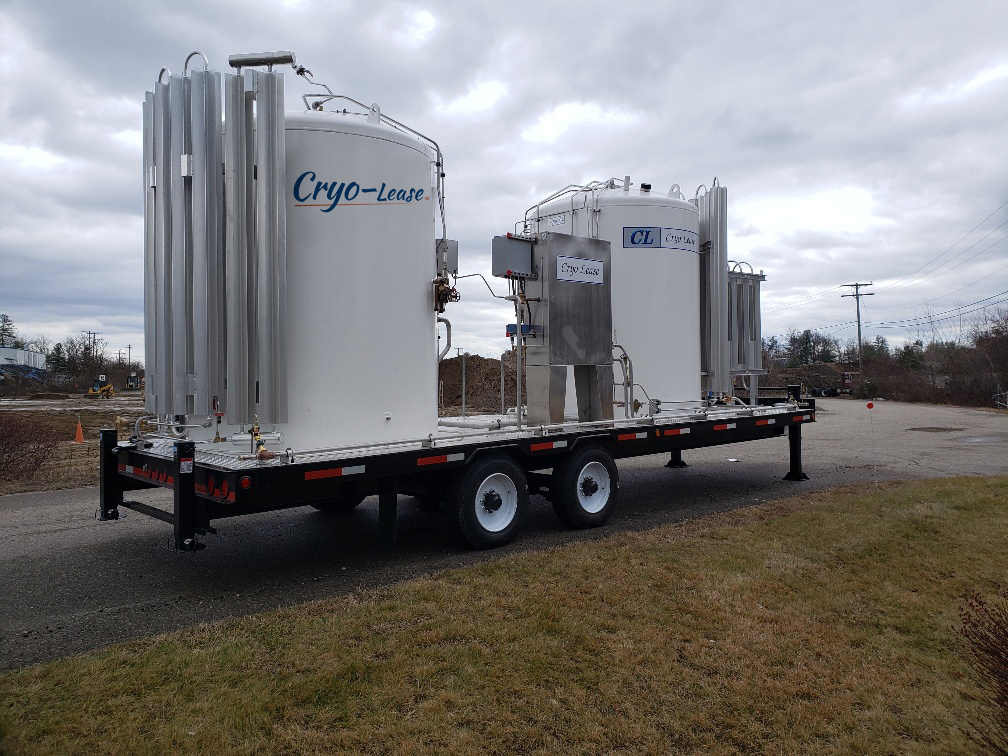
When analyzing the market for temporary medical gas solutions, the Cryo-Lease 5500 Dual Med Portable stands out as the ideal asset for hospital construction environments. This isn't merely a storage tank; it’s a mobile medical gas hub designed to solve the specific logistical and technical challenges of a healthcare facility.
1. Redundancy as a Standard, Not an Option
The "Dual" in the 5500 Dual Med refers to its redundant configuration. In a hospital setting, if one regulator or valve path fails, the system must be able to switch to a secondary path without a drop in line pressure. This unit is engineered with dual regulators and dual-path manifolding, ensuring that even during a component failure, the flow of oxygen or nitrogen to the facility remains constant.
2. Compact Design for Tight Hospital Footprints
Hospital campuses are notoriously crowded. Between ambulance bays, parking structures, and existing utility sheds, there is rarely "extra" space. Standard large-scale trailers often require significant clearance and a massive turning radius, making them difficult to position near the facility's tie-in points. The 5500 Dual Med features a compact, agile footprint. Its design allows it to be maneuvered into tight loading docks or narrow alleyways between buildings—placing the gas supply exactly where it needs to be to minimize the length of temporary piping runs.
3. High-Pressure Performance for High-Stakes Environments
Surgical tools and ventilators require consistent, high-pressure flow. A drop in line pressure during a complex procedure is a nightmare scenario for any surgical team. The 5500 Dual Med is built to maintain the high-pressure thresholds required by modern medical equipment, ensuring that the temporary supply performs identically to the permanent bulk system it is replacing.
The Financial Logic: Why Leasing is Optimal for Healthcare Systems
Beyond the technical requirements, hospital administrators are increasingly focused on capital discipline. While the need for a temporary gas supply is critical, it is, by definition, temporary.
Preserving Capital for Patient Care
Sinking hundreds of thousands of dollars into the purchase of backup cryogenic equipment that may sit idle for 90% of the year is an inefficient use of a hospital's capital budget. Leasing allows facilities to move the cost of the temporary supply from CAPEX (Capital Expenditure) to OPEX (Operating Expenditure). This preserves the hospital’s capital for investments that directly impact patient outcomes, such as new imaging technology or surgical robotics.
Flexibility for Project Timelines
Construction projects are famous for shifting timelines. A planned two-week tie-in can easily stretch into a month due to unforeseen site conditions. Cryo-Lease’s flexible lease terms allow hospitals to scale their rental period based on the reality of the construction schedule. Whether the equipment is needed for a month long project or an eighteen-month multi-phase renovation, the lease can be adjusted to match the project's heartbeat.
Maintenance and Compliance Outsourcing
When a hospital owns a piece of cryogenic equipment, they are responsible for its maintenance, safety inspections, and regulatory compliance. When they lease from Cryo-Lease, that burden is transferred to the experts. Every unit delivered to a hospital site has been meticulously inspected, cleaned for medical service, and verified for performance. This "turnkey" approach reduces the workload on the hospital's internal engineering team.
Logistics and Professional Support: The "Turnkey" Difference
For hospital operations staff, the most valuable part of a lease isn't just the tank—it's the service. Cryo-Lease understands that hospital technicians are already stretched thin managing the day-to-day complexities of a medical facility.
Our turnkey installation service means we manage the logistics from end to end:
Site Survey: Assessing the best placement for the unit to ensure safety and accessibility.
Professional Commissioning: Ensuring the unit is pressurized and flowing correctly before the primary system is taken offline.
Remote Monitoring: Standard telemetry allows both the hospital and the gas distributor to monitor levels in real-time, eliminating the anxiety of a potential run-out during a critical construction phase.
Qualified Medical O2 Support: To ensure total safety and compliance, every installation and removal is staffed by two medical O2 compliant technicians who meet NFPA 55 & 99 and FDA qualification standards.
Ensuring Zero Disruption:
The Strategic Role of Flexible Cryogenic Leasing in Hospital Construction and Planned Outages.
The Cryo-Lease 5500 Dual Med Portable stands out as the ideal asset for hospital construction environments.
Conclusion: Partnering for Patient Safety
In the industrial gas sector, we often focus on the hardware—the PSI, the gallons, and the flow rates. But in the healthcare sector, those numbers represent lives.
As hospitals continue to evolve and expand to meet the needs of a growing population, the demand for reliable, flexible, and redundant temporary gas supplies will only increase. By utilizing assets like the Cryo-Lease 5500 Dual Med Portable, healthcare facilities can approach their construction and maintenance projects with confidence.
Choosing a flexible lease rental is more than a financial decision; it is a strategic commitment to patient safety. It ensures that while the building around them changes, the life-sustaining flow of gas to the patient never wavers.

Ready to de-risk your next facility upgrade?
Explore our medical gas solutions and flexible leasing terms at www.cryolease.rentals or contact our field service team to schedule a site assessment for your upcoming project.