
In the industrial gas and chemical processing sectors, the transition of a substance from a cryogenic liquid to a usable process gas is a phase change that governs the entire speed of production. This transformation relies heavily on industrial vaporizers—specifically ambient air vaporizers, which utilize the relative warmth of the surrounding atmosphere to heat and vaporize cryogenic fluids like liquid nitrogen (LIN), liquid oxygen (LOX), and liquid argon (LAR).
While the physics behind this process remain constant, the commercial and operational environments surrounding it are highly volatile. Industrial facilities, independent gas distributors, and project engineers frequently face sudden, intense spikes in gas demand. These surges can be driven by seasonal temperature shifts, temporary plant turnarounds, large-scale commissioning projects, or emergency pipeline disruptions.
When these demand spikes occur, the primary bottleneck is rarely the volume of cryogenic liquid available on-site; rather, it is the capacity of the vaporization system to convert that liquid into gas without losing line pressure or experiencing a costly system freeze-up.
To maintain operational continuity without incurring massive capital expenditures, the modern industrial sector is increasingly turning to high-capacity, mobile vaporization infrastructure deployed on a flexible lease model. By looking at how vaporizer sizing directly impacts everyday operations, facility leaders can better understand how assets like the Cryo-Lease Dual 25K, Dual 75K, and the new Dual 100K Portable vaporizers serve as critical infrastructure stabilizers.
The Sizing Challenge: Why Average Flow is a Dangerous Metric
One of the most frequent errors in industrial facility design is sizing vaporization equipment based on average hourly or daily consumption. While an average metric looks clean on a utility bill or a spreadsheet, it fails to account for the physical reality of peak demand.
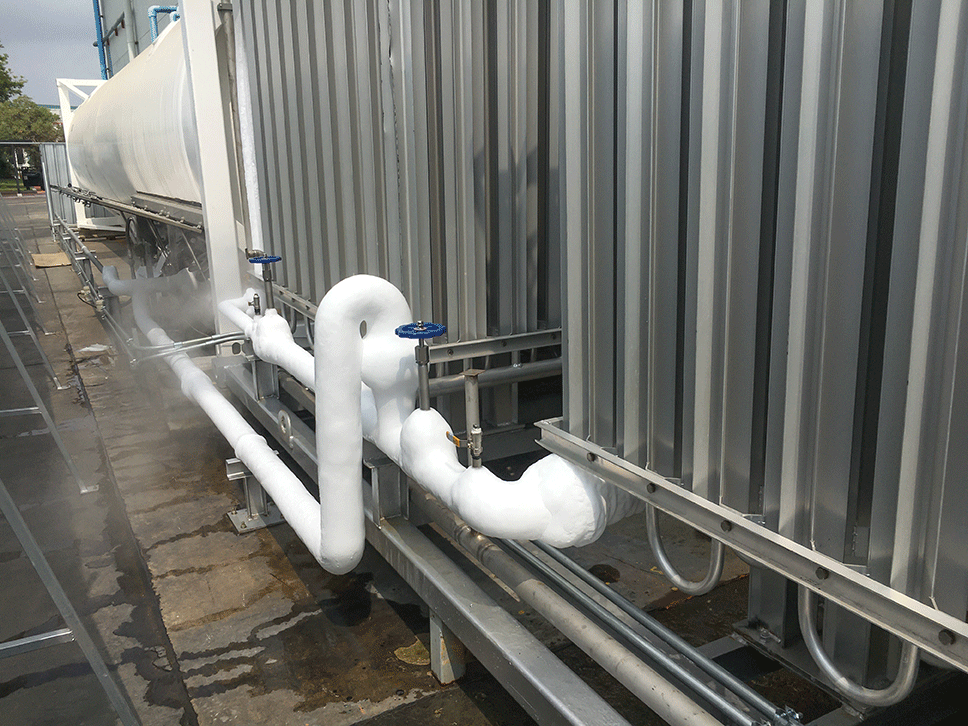
Ambient air vaporizers operate via natural convection. As cryogenic liquid enters the extruded aluminum fins of the vaporizer at temperatures below -300 degrees Fahrenheit, it draws heat from the surrounding air. As gas flows continuously through the system, moisture in the air freezes instantly upon contact with the aluminum fins.
This frost layer acts as a highly effective thermal insulator. If the flow rate is sustained at a high volume without interruption, the frost quickly thickens into solid ice. When this happens, the heat transfer rate drops, and the temperature of the gas leaving the vaporizer plummets.
If the gas temperature drops too low, it can cause severe failure downstream. This includes the embrittlement of carbon steel piping, the destruction of regulators, and the automatic shutdown of sensitive processing equipment. In a worst-case scenario, unvaporized liquid can enter the downstream line, leading to rapid, dangerous pressure spikes as it expands violently inside warm piping.
Therefore, a vaporizer must be sized not for the average volume consumed over an entire shift, but for the maximum instantaneous flow rate—the "peak draw"—that occurs when every downstream process fires simultaneously. Furthermore, the sizing calculation must account for worst-case environmental conditions, such as cold winter mornings or periods of high humidity where frost accumulation occurs at an accelerated rate.
Critical Industrial Triggers for Temporary Vaporization Infrastructure
Because peak demand is often cyclical or project-based, building permanent, oversized vaporization yards is rarely a justifiable expense. Instead, facilities rely on temporary, high-flow infrastructure to manage specific operational windows across a variety of industries.
1. Wastewater Oxygenation and Environmental Compliance
Wastewater treatment plants frequently experience severe operational strain during the warmer summer months. As water temperatures rise, the amount of dissolved oxygen the water can naturally hold decreases, while the biological activity of microorganisms spikes. This creates a surge in biological oxygen demand (BOD) that standard ambient aeration systems simply cannot meet.
To prevent non-compliance and manage this seasonal biological spike, treatment facilities introduce high-purity liquid oxygen into the wastewater streams. This requires immediate, high-volume vaporization infrastructure that can run continuously through the peak of summer and be easily removed when seasonal temperatures drop, making a temporary lease the most logical operational choice.
2. Plant Shutdowns, Turnarounds, and Bypasses
During a planned facility turnaround, primary bulk gas systems must often be isolated, depressurized, and inspected for regulatory compliance. However, critical utility systems, blanketing processes, and safety systems within the plant must remain active throughout the maintenance window.
A mobile, high-capacity vaporizer skid allows the facility to establish a temporary bypass loop. Cryogenic transport trailers can feed directly into a leased vaporizer, which then supplies the plant’s main header at the exact pressure and flow rate required, completely isolating the primary bulk yard without interrupting the turnaround schedule.
3. Nitrogen Purging and Pipeline Commissioning
In the oil and gas, petrochemical, and pipeline sectors, commissioning new infrastructure or preparing existing lines for maintenance requires a total displacement of hydrocarbons and oxygen. This is achieved through high-volume nitrogen purging.
These operations require millions of standard cubic feet of dry nitrogen gas delivered over a tight, continuous time frame. Because these projects are strictly temporary, the infrastructure must be completely mobile, capable of being towed to remote right-of-ways or temporary staging areas, performing the high-flow purge, and exiting the site immediately once the project is verified.
4. Emergency Backup and Grid Disruptions
Mechanical failures happen. If a facility’s primary vaporizer suffers a mechanical breakdown, structural collapse due to heavy ice loading, or a loss of vacuum in the associated bulk storage tank, production grinds to a halt. In high-value manufacturing—such as industrial laser cutting, aerospace component production, or semiconductor fabrication—even a brief drop in gas pressure can result in thousands of dollars in ruined inventory and lost uptime.
A rapid-deployment vaporizer lease acts as an immediate insurance policy, restoring primary gas flow rates while permanent repairs are conducted on the main system.
The Cryo-Lease Portfolio: Redundant Engineering for High-Flow Applications
To address these diverse industrial challenges, Cryo-Lease provides a suite of vaporizer assets focused on a single core principle: redundancy through a dual-path design.
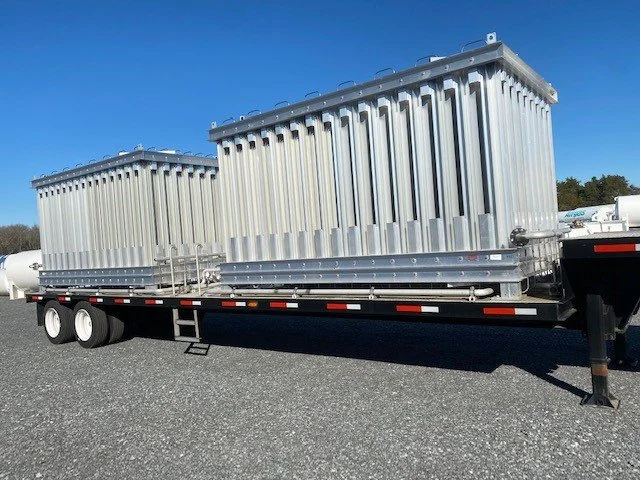
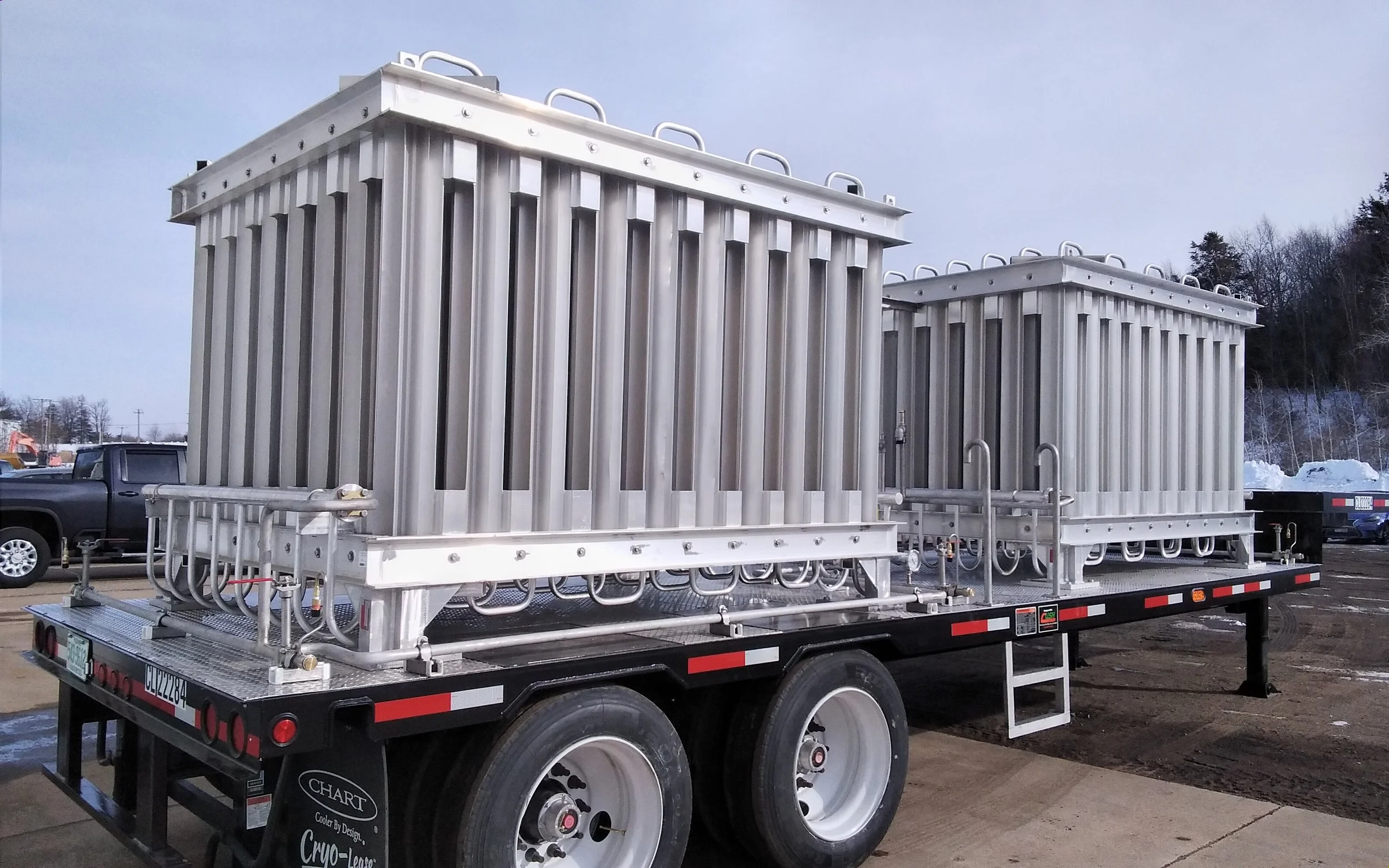
By configuration, a "Dual" vaporizer consists of two identical ambient air vaporizer banks manifolded together with switching valves. While Bank A is online and flowing gas, Bank B is completely isolated, allowing ambient air and winter elements or sunlight to naturally defrost the ice accumulation from its fins. This alternating cycle ensures continuous, 24/7 operation without the progressive drop in performance that plagues single-bank systems.
The Dual 25K Vaporizer
Rated for a continuous flow of up to 25,000 SCFH (Standard Cubic Feet per Hour), this asset is the ideal solution for mid-sized industrial applications, local pipeline purges, and hospital construction bypasses. Its structural frame makes it highly durable for rugged industrial environments, allowing it to be easily placed via forklift or crane into tight utility footprints where space is limited.
The Dual 75K Vaporizer Skid and Portable Trailer
For heavy industrial manufacturing, larger chemical plant turnarounds, and seasonal wastewater surges, the 75,000 SCFH capacity of these units provides a massive operational safety margin. Available as either a static skid for long-term seasonal projects or mounted on a heavy-duty portable trailer for rapid mobilization, the Dual 75K handles substantial flow requirements with ease, even in high-humidity zones where icing is an immediate threat.
The New Frontier: The Dual 100K Vaporizer Portable
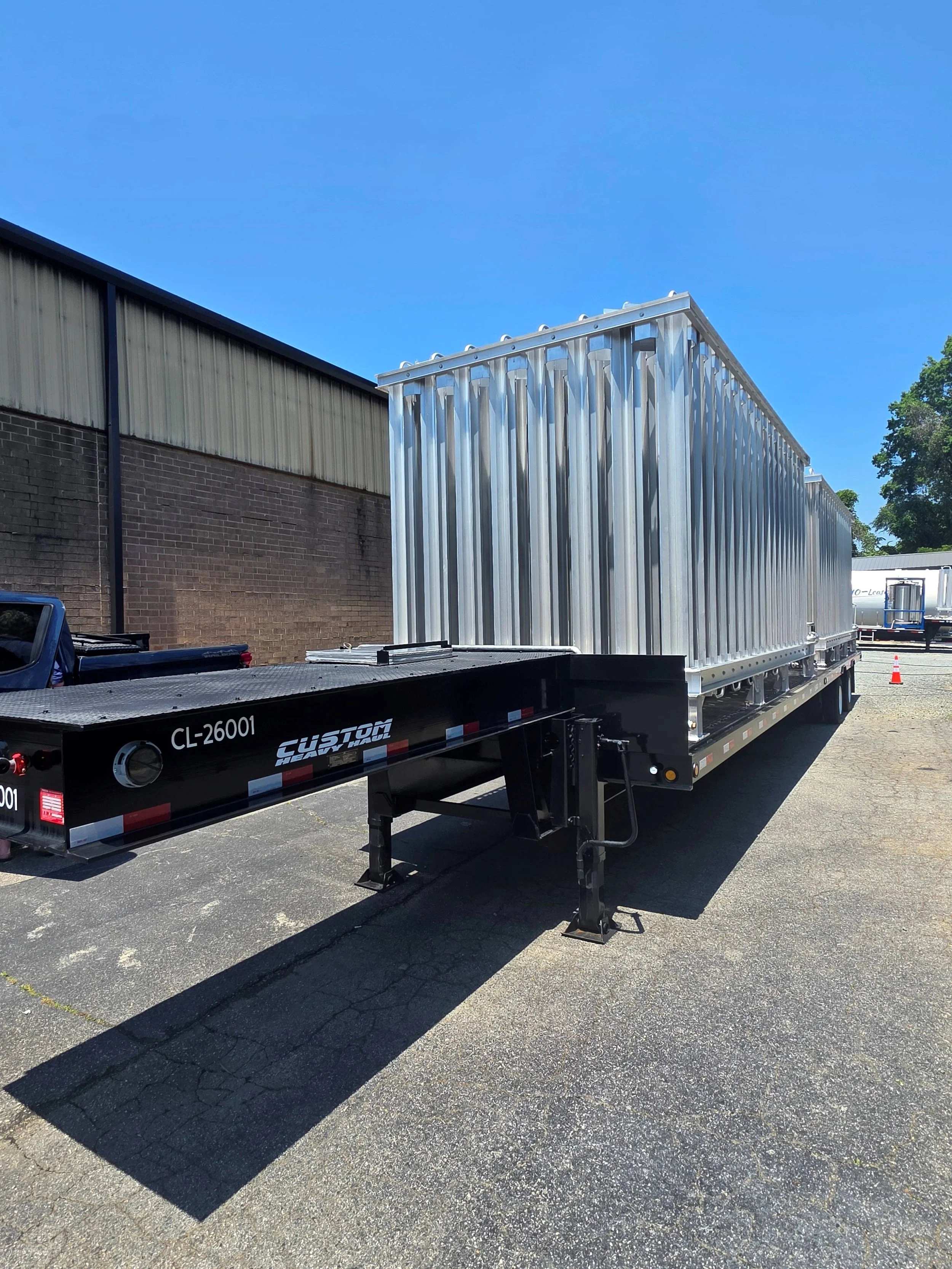
As industrial project scales expand, Cryo-Lease has introduced its largest mobile vaporization asset to date: the Dual 100K Vaporizer Portable. Delivering an unprecedented 100,000 SCFH of continuous vaporization capacity on a fully mobile transport chassis, this unit is engineered for the most demanding utility-scale projects in North America.
The Dual 100K Portable eliminates the traditional logistical barrier of high-flow setups, which previously required multiple smaller skids to be manifolded together on-site with complex temporary piping. This asset rolls onto a job site ready to perform as a single, high-capacity powerhouse, minimizing the physical footprint and reducing the number of connection points that must be leak-tested by field service crews.
The Economics of Infrastructure Agility: Shifting from CAPEX to OPEX
The engineering logic behind high-capacity vaporizers is clear, but the financial logic of leasing those assets is equally compelling for modern business operations. When a distributor or facility manager chooses a flexible lease model rather than capital procurement, they are transforming a heavy, long-term liability into an agile, short-term operating expense (OPEX).
Capital Preservation: Purchasing a high-spec, dual-bank vaporizer requires a significant upfront capital expenditure (CAPEX). If that asset is only utilized to its full capacity during a two-month summer surge or a three-week turnaround, the return on investment is incredibly poor. Leasing keeps capital fluid, allowing funds to be directed toward core business drivers like product development or hiring.
Risk Transfer and Compliance: Ownership of cryogenic hardware carries an ongoing burden of safety inspections, pressure vessel certifications, and structural maintenance. Under a Cryo-Lease framework, that technical liability remains with the experts. Every asset is delivered to the site fully verified, cleaned for oxygen service, and compliant with current industrial codes.
Turnkey Execution: The value of a lease is directly tied to the speed and ease of its deployment. Cryo-Lease backs its fleet with an expanded field service team that handles the end-to-end technical lifecycle of the project. From initial site sizing and delivery to professional installation, commissioning, and final removal when the demand window closes, our team handles the details. This protects your internal engineering hours, allowing your crews to focus entirely on their primary operations.
Managing Peak Demand:
How High-Capacity Vaporizer Sizing and Flexible Leasing Define Modern Industrial Gas Infrastructure
Conclusion: Securing the Flow of Production
Industrial gas demand is rarely linear. The companies that thrive in the current industrial landscape are those that build flexibility into their infrastructure, recognizing that the ability to scale up gasification capacity on demand is a distinct competitive advantage.
Whether a facility is bracing for a documented summer wastewater surge, scheduling a high-stakes plant turnaround, or deploying a massive pipeline purge project, having access to correctly sized, redundant vaporization assets is the key to preventing costly downtime. Through the deployment of high-capacity assets like the Dual 25K, Dual 75K, and the new Dual 100K Portable, Cryo-Lease provides the physical and operational bridge that keeps North American industry moving forward seamlessly.
Is your facility prepared for the next shift in demand? Review our complete inventory of high-flow dual vaporizers and mobile trailers at www.cryolease.rentals or connect with our team today to schedule a technical sizing assessment for your upcoming project window.

Don't Let Peak Demand Freeze Your Operations.
Whether you're managing summer production surges, preparing for a plant turnaround, or navigating a temporary system outage, Cryo-Lease has the high-capacity vaporizer fleet and turnkey field service to keep your gas flowing uninterrupted.